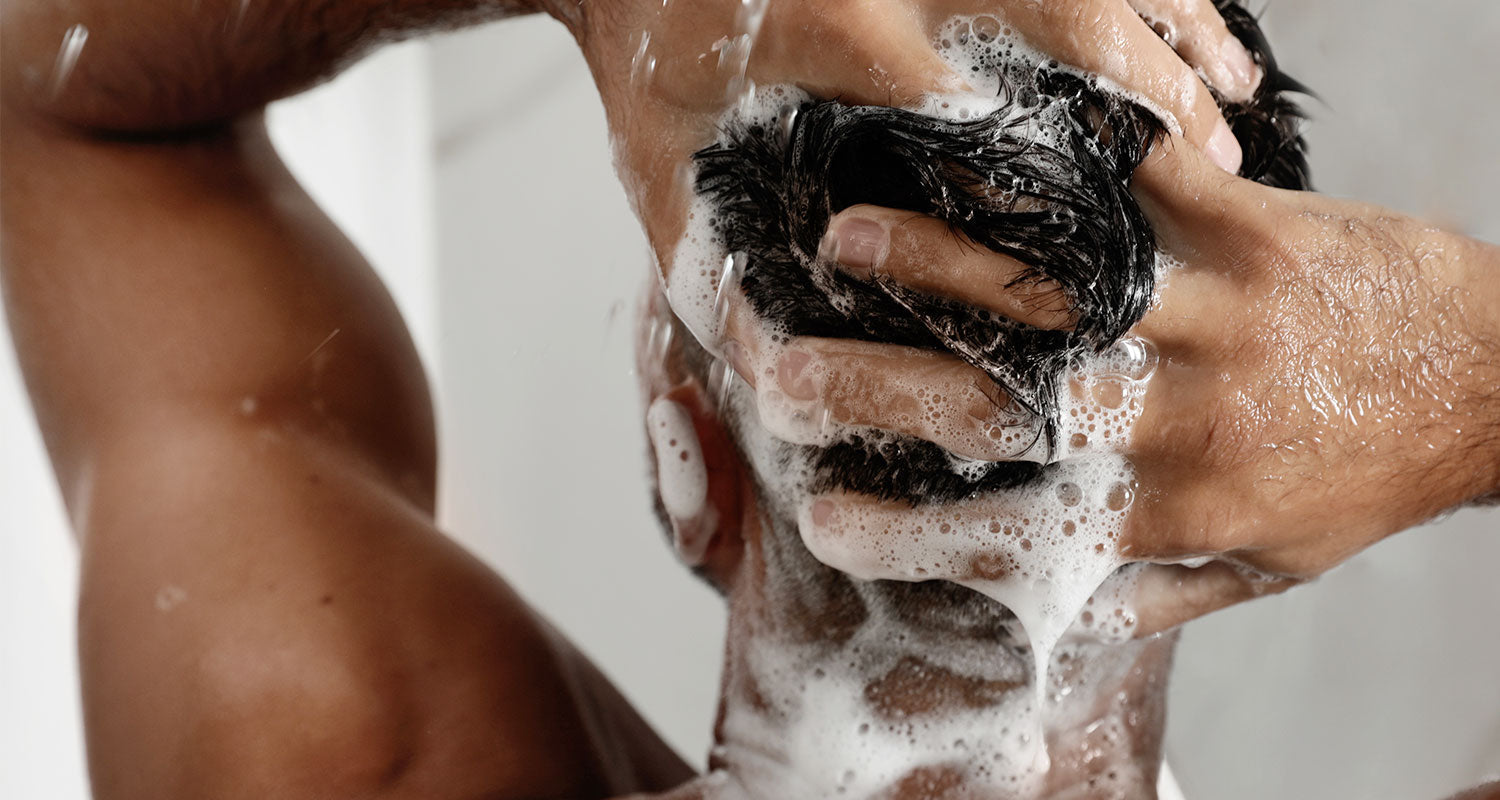
Pool and sea water can leave hair rough, tangled or difficult to style, while the scalp may feel coated after repeated exposure to chlorine, salt, sunscreen and perspiration.
In this guide:
How chlorinated pool water affects hair and scalp
Chlorine-based disinfectants control microorganisms in pools. The effect on hair depends on concentration, exposure time, hair condition and other pool chemicals and metals.
Repeated wetting and drying causes hair fibres to swell and contract, increasing friction and cuticle weathering. Research involving swimmers has identified cuticle changes and discolouration. Green hair is often blamed on chlorine alone, but copper in pool water can be an important contributor, especially in light or porous hair.
Pool water may also leave the scalp feeling dry or uncomfortable where the barrier is already sensitive. This does not mean swimming necessarily causes a scalp condition.
How salt water affects the hair
As sea water evaporates, dissolved salts can remain on the hair and scalp. Hair may feel stiff, coarse or tangled, particularly if bleached, coloured, curly or already dry. Sea swimming is also combined with sun, wind and sunscreen, making cumulative exposure more relevant than salt alone.
| Exposure | Common effect | Useful response |
|---|---|---|
| Pool water | Residue, roughness, possible colour change | Rinse promptly and cleanse when needed |
| Sea water | Salt deposits, stiffness and tangling | Fresh-water rinse and condition |
| Sun and wind | Weathering and dryness | Shade, hat and reduced friction |
Read the full overview in Summer Scalp Reset.
Before swimming
Wet the hair with fresh water
Hair is porous. Thoroughly wetting it before entering the pool or sea may reduce how much swimming water it absorbs initially.
Detangle gently
Use a wide-tooth comb before swimming if tangling is likely. Avoid aggressive brushing when hair is wet and swollen.
Secure without excessive tension
A loose plait or comfortable swim cap can reduce tangling. Avoid styles that pull tightly at the hairline.
Protect exposed scalp
Outdoor swimmers should consider the parting, ears, neck and areas of thinning.
After swimming
Rinse promptly
Fresh water removes some pool chemicals, salt and sunscreen before they remain on the hair longer than necessary.
Shampoo the scalp
Concentrate cleansing around the parting, crown, behind the ears, hairline and nape. A second application may help after long swims or heavy sunscreen use.
Condition the lengths
Conditioner reduces friction and improves combing. Apply from the mid-lengths to the ends and detangle carefully.
Use a mask according to need
Dry, coloured or textured hair may benefit from periodic deeper conditioning to improve manageability.
A fragrance-free post-swim routine
Cleanse with Olsson Sensitive Shampoo, followed by Sensitive Conditioner. Where lengths feel particularly dry after repeated swimming, use the Sensitive Hair Mask periodically.
Advice for frequent swimmers
Regular swimmers may need to wash more often. This is not automatically damaging when cleansing is well tolerated and the lengths are conditioned. Monitor increased tangling, breakage and roughness. Colour-treated hair may need advice from a professional stylist where pool exposure causes visible tonal change.
Chlorine and salt water do not require aggressive detoxification. Limit how long residue remains, reduce friction through wet hair and restore manageability through the lengths.
General educational information only.