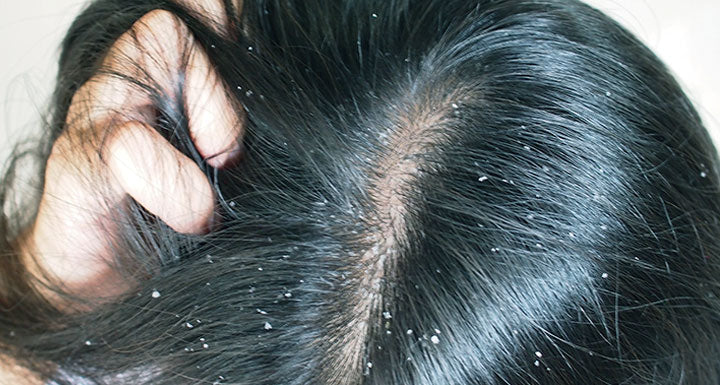
Scalp sweating is a normal response to heat. The scalp contains many eccrine sweat glands, which release a dilute, salty fluid when body temperature rises through warm weather, exercise or both. As that fluid evaporates, it helps the body release heat.
In this guide
- Why the scalp sweats
- Why sweaty hair looks greasy
- Can sweat make the scalp itch?
- Should you wash after sweating?
- A gentle routine
Why does the scalp sweat?
Eccrine sweat glands are distributed across most of the body and are particularly plentiful on the scalp and forehead. They respond to increases in internal or environmental temperature. Sweating is therefore part of thermoregulation: the body's system for maintaining a stable internal temperature.
Perspiration may increase during hot weather, exercise, stress, menopause or illness. Some medicines and health conditions can also influence sweating. A sudden, unexplained or disruptive change should be discussed with a healthcare professional rather than attributed to haircare alone.
Why can a sweaty scalp look greasy?
Sweat and sebum are different. Sebum is an oily mixture produced by sebaceous glands associated with hair follicles. It lubricates the skin and hair and contributes to the skin's surface barrier. Sweat is water-based and produced by sweat glands.
| Sweat | Sebum |
|---|---|
| Water-based and salty | Lipid-based and oily |
| Helps regulate temperature | Helps lubricate skin and hair |
| Increases with heat and exercise | Influenced by hormones, age and genetics |
Once mixed at the scalp, sweat can spread existing sebum along the roots. Humidity may also reduce root lift, making the hair sit closer to the head and making oil more visible. This is why hair can look greasier after a hot journey or workout even when the scalp has not produced an exceptional amount of new sebum.
Read the wider seasonal guide: Summer Scalp Reset.
Can sweat make the scalp itch?
Sweat itself is normal, but prolonged moisture, salt residue, heat and friction may make an already sensitive scalp feel less comfortable. Tight hats, damp hair held against the scalp and repeated scratching can add to irritation.
People living with eczema, psoriasis, seborrhoeic dermatitis or contact allergy may notice that heat and perspiration make existing symptoms more apparent. That does not mean sweat is the underlying cause. Persistent redness, scaling, pain or soreness needs individual assessment.
Should you wash your hair every time you sweat?
There is no universal rule. Light perspiration may settle after the scalp dries, and a fresh-water rinse may be sufficient. After heavy exercise, prolonged heat exposure or repeated dry-shampoo use, shampooing can help remove the combined residue of sweat, sebum and styling products.
Research into shampoo frequency suggests that frequent washing can be compatible with good scalp and hair condition when a suitable shampoo and appropriate technique are used. The important distinction is between washing often and cleansing aggressively.
A gentle routine for a sweaty scalp
1. Let heat escape
Remove tight headwear after exercise and allow the scalp to cool. Avoid leaving the hair tightly tied while it remains wet with perspiration.
2. Rinse or cleanse according to exposure
Use fresh water after lighter perspiration. Shampoo after heavier sweating or where sunscreen, dry shampoo and styling products are also present.
3. Apply shampoo to the scalp
Part the hair with the fingers and distribute shampoo across the scalp. Use the pads of the fingertips rather than the nails.
4. Rinse thoroughly
Take extra time around the crown, behind the ears and at the nape, where residue can remain.
5. Condition the lengths
Apply conditioner mainly through the mid-lengths and ends unless the product is specifically intended for scalp use.
A simple Olsson Scandinavia summer option
Olsson Scandinavia Sensitive Shampoo provides fragrance-free cleansing for sensitive and allergy-prone scalps. Where humidity leaves fine hair flat, Sensitive Volume Shampoo is designed to cleanse while supporting root volume.
Follow with Sensitive Conditioner through the lengths. Those concerned about introducing a new formulation can begin with the Olsson Scandinavia patch test.
A sweaty scalp is usually a sign that the body's cooling system is working. Summer care should focus on removing the mixture left behind rather than treating perspiration as dirt. Rinse after lighter exposure, shampoo after heavier sweating when needed, and choose a routine that cleans effectively without leaving the scalp persistently tight or uncomfortable.
This article is for general education and does not diagnose a condition or replace individual medical advice.
Further reading and references:
1. Functions of the skin
2. Antiperspirants and eccrine sweating
3. Shampoo wash frequency and scalp condition